Méridien · A story of mud, siege and return
Built from earth.Twice.
In 1818 an Ottoman-Egyptian army razed Diriyah: palaces pulled down, walls levelled, every date palm of the oasis cut. Two centuries later the same city stands on the same bend of Wadi Hanifah, rebuilt from the same earth, with a UNESCO listing and a museum programme on the way. This is the story of a material that outlived its own destruction.
Start in 1446
DIRIYAH · WADI HANIFAH · 24.73N 46.57E · SATELLITE: SENTINEL-2 CLOUDLESS BY EOX · MODIFIED COPERNICUS SENTINEL DATA 2020
Chapter 01 · The wadi
A city chooses a riverbed
In 1446, Mani al-Muraydi, an ancestor of the House of Saud, settled his people on Wadi Hanifah: a green vein of groundwater and date palms crossing the Najd plateau.3
The wadi gave the settlement its three raw materials: water to drink, palms for shade and timber, and clay for everything else. The satellite view above still shows the logic — one green line in a desert, with the old city sitting exactly on its bend.
For almost three centuries Diriyah grew quietly along the banks. Then it stopped being quiet.
1446
Chapter 02 · The material
Recipe for a capital: clay, straw, sun
Najdi architecture is built from the wadi itself. Clay dug from the bed, mixed with straw, shaped into bricks, dried in the sun: adobe.1
An adobe wall, cut open
- 01
Lime-plastered crown
sacrificial top layer, renewed after rains
- 02
Adobe courses
wadi clay and straw, sun-dried; walls up to a metre thick
- 03
Stone footing
keeps the mud out of the ground moisture
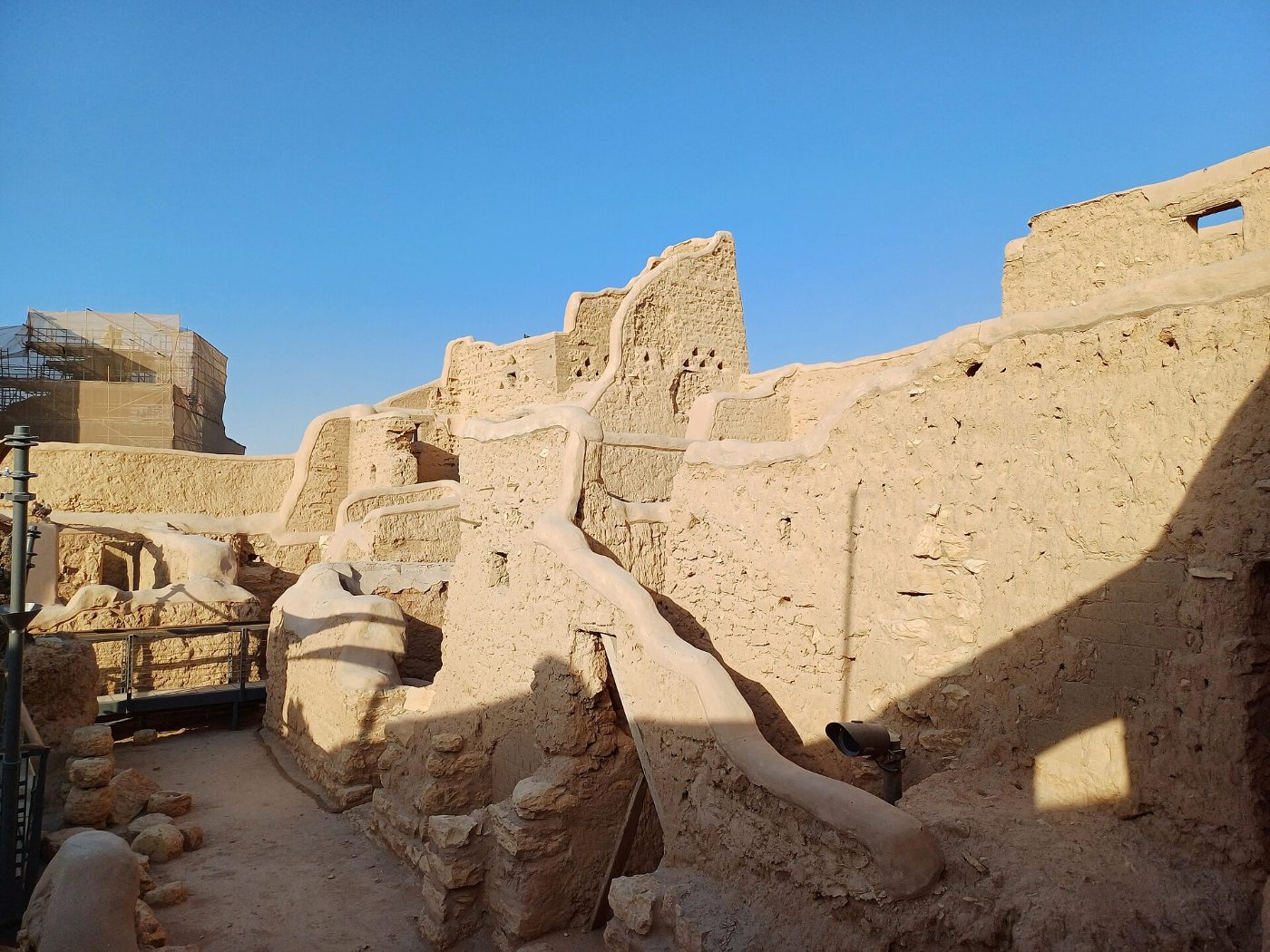
Metre-thick earthen walls hold off the Najd heat; triangular openings ventilate without letting the sun in. The material asks for maintenance and gives back a city that can be rebuilt from the ground it stands on.
Which, two centuries later, is exactly what happened: the restoration of the 2010s used the traditional techniques and the same wadi earth.1
Chapter 03 · The capital
1727: the mud city becomes a state
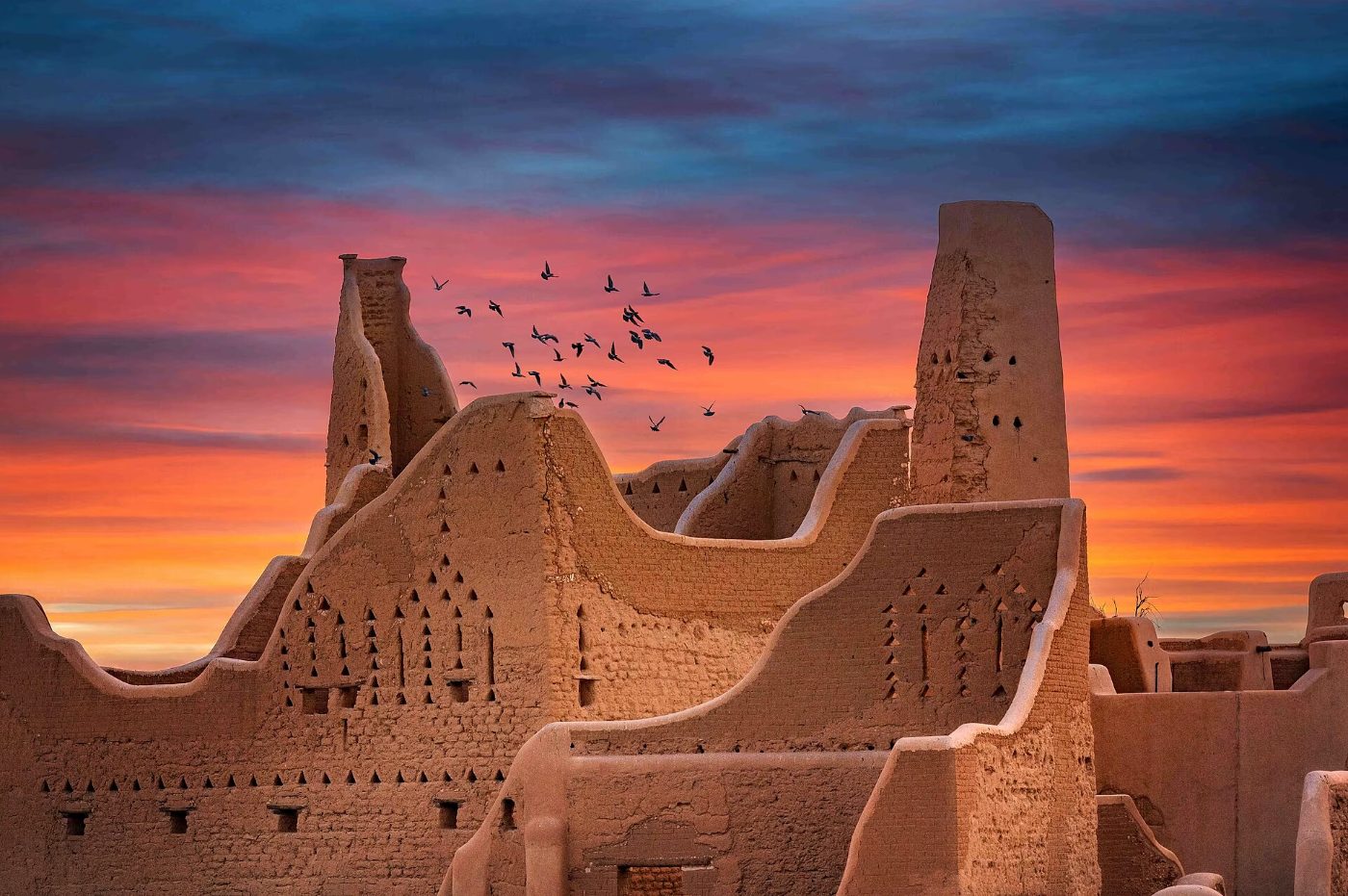
In 1727 Diriyah became the capital of the First Saudi State, and At-Turaif, its palace quarter on the west bank, grew into the seat of a power that reached across the peninsula.1
91
Chapter 04 · The siege
Six months, then nothing
In 1818 the Ottoman-Egyptian army of Ibrahim Pasha besieged Diriyah for six months. When the city fell, the destruction was methodical.2
Palaces
pulled down
At-Turaif's palace quarter was demolished after the surrender.
Walls
levelled
The fortifications that had held for six months were dismantled.
Palms
every one cut
The oasis itself was destroyed: each date palm of the wadi felled.
The capital of the Saudi state moved to Riyadh, a few kilometres downstream. At-Turaif stayed as it fell: a mud city slowly returning to the wadi it was made from, for a century and a half.
Chapter 05 · The return
UNESCO first, museums next
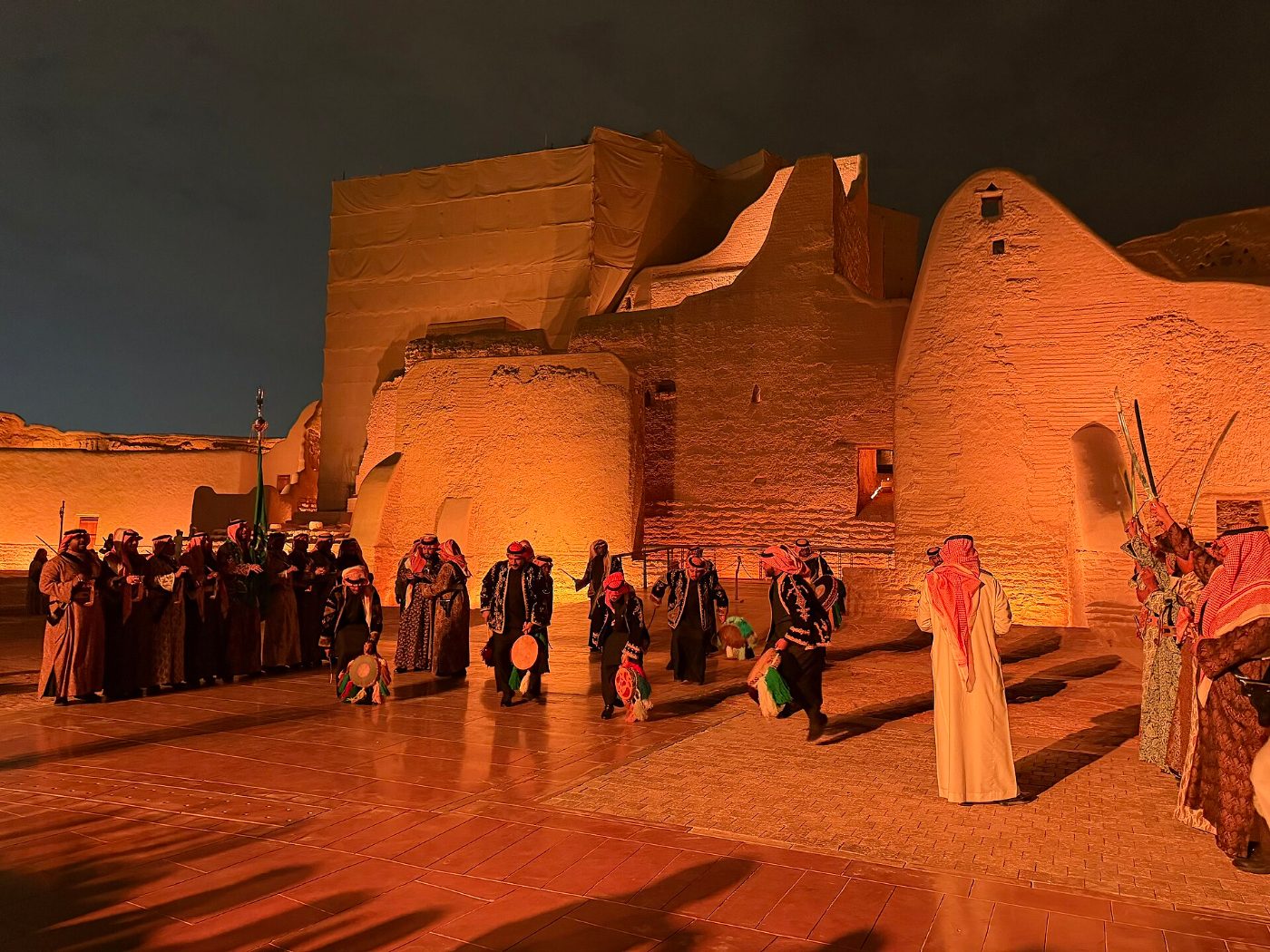
In 2010 At-Turaif entered the UNESCO World Heritage List. A decade of restoration followed, in the traditional techniques and the same earth, and on 4 December 2022 the district opened to the public, alongside the Bujairi Terrace across the wadi.14
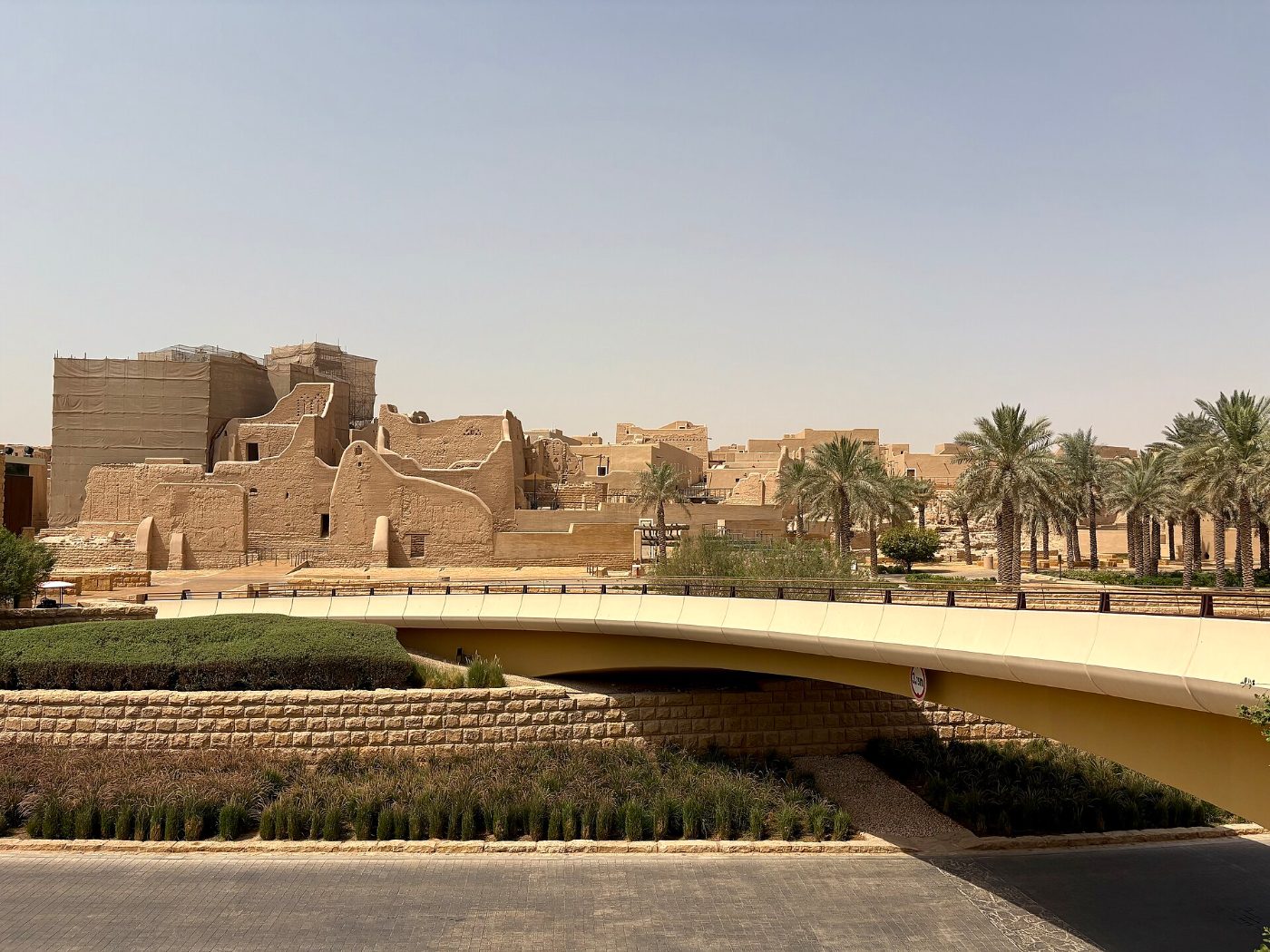
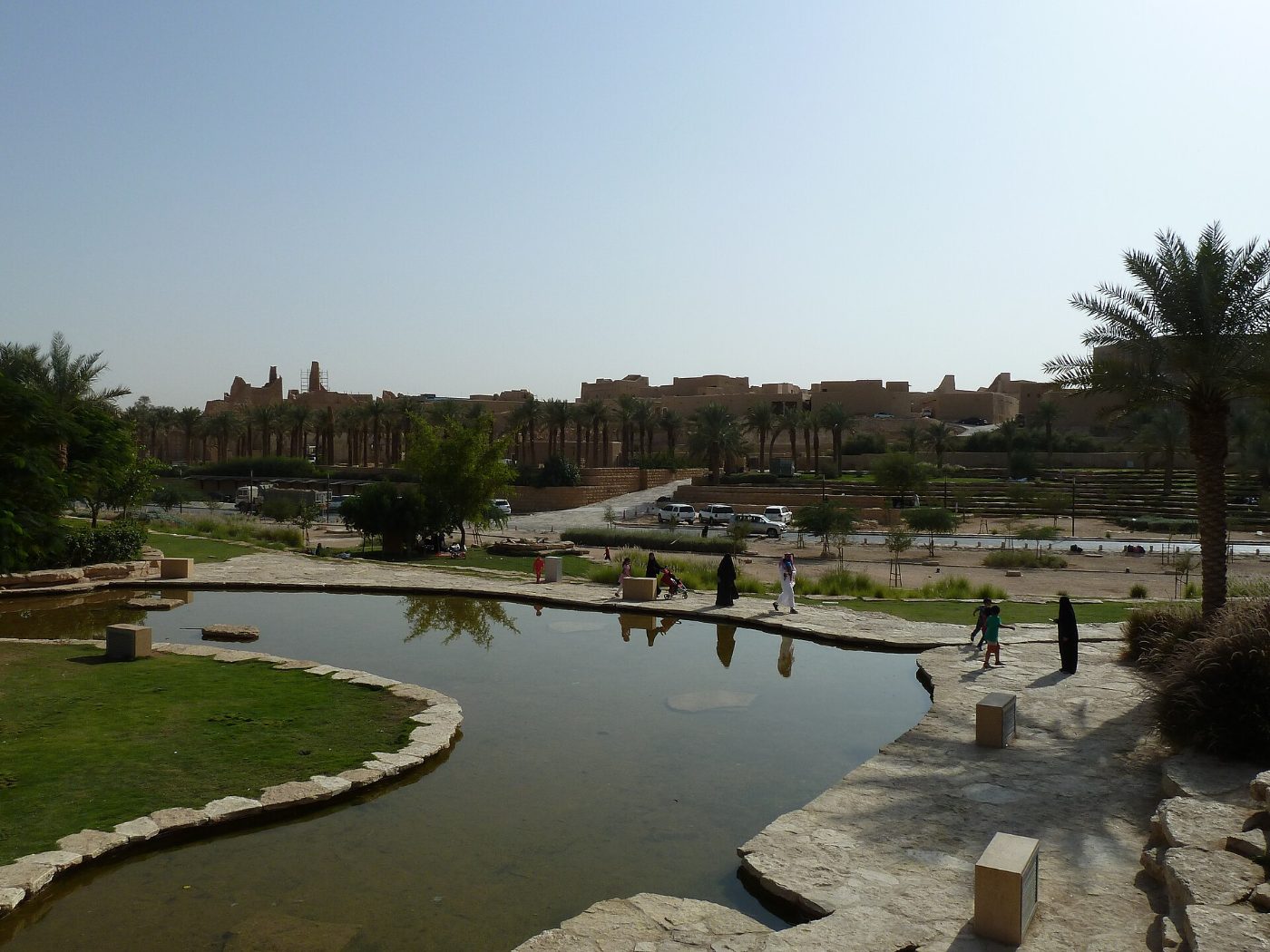 2015 · CLOSED FOR RESTORATION2025 · OPEN
Drag the slider between 2015 and 2025
Two corners of the same district, ten years apart: the left frame was taken while At-Turaif was closed for restoration, the right one after reopening.
Chapter 06 · The museums
The earthen city becomes a museum district
Diriyah's masterplan gives At-Turaif a museum programme: six museums and 26 cultural attractions are announced for the district.5
- House of Al Saud MuseumANNOUNCED
- Diriyah Art MuseumANNOUNCED
- Saudi States & Arabian Peninsula MuseumANNOUNCED
- 100 Stories MuseumANNOUNCED
- Diriyah Arts CentreANNOUNCED
- Digital Art MuseumANNOUNCED
- Diriyah Art FuturesOPEN · 26.11.2024
One institution is already open and previews the direction: Diriyah Art Futures, the first new-media art hub in the Middle East and North Africa, opened on 26 November 2024 with the debut exhibition Art Must Be Artificial and a programme for 12 artists from 11 countries.6
Statuses as published: the six museums are announcements in Diriyah's current masterplan, not openings. This story reports them as such.
6
Chapter 07 · The record
Sources
Dates and construction history follow UNESCO's documentation of At-Turaif and the public record. Announced museums are reported as announcements; no visitor targets of the wider Diriyah development are used in this story.
- 01UNESCO World Heritage · At-Turaif District in ad-Dir'iyah (ref. 1329): history, earthen architecture, restoration
- 02Wikipedia · Siege of Diriyah (1818): six-month siege and destruction of the city
- 03Diriyah Company · Diriyah, the original home of the Saudi state (1446, Mani al-Muraydi)
- 04Saudi National Portal · At-Turaif reopens to the public, 4 December 2022
- 05Diriyah Company · At-Turaif district page (museum programme: six museums, 26 attractions)
- 06The Art Newspaper · Diriyah Art Futures, the Gulf's first new-media art institute, opens (Nov 2024)
- 07Sentinel-2 cloudless by EOX (s2maps.eu) · modified Copernicus Sentinel data 2020 — satellite view of Wadi Hanifah
- 08Photography · Wikimedia Commons: Radosław Botev (CC BY 3.0 PL), Unnaugan, Ahad.F (CC BY-SA 4.0), xiquinhosilva (CC BY 2.0), Hokky (CC0)